


The rapid acceleration of digital technology has significantly increased the number of opportunities available for skilled workers in the field of data science. A post graduate diploma in data science is now one of the most popular programs available for workers wanting to begin or expand their focus in the data field. Understanding the particulars of post graduate diploma in data science is important for fresh graduates wanting to specialize or senior professionals wanting to shift to analytics.
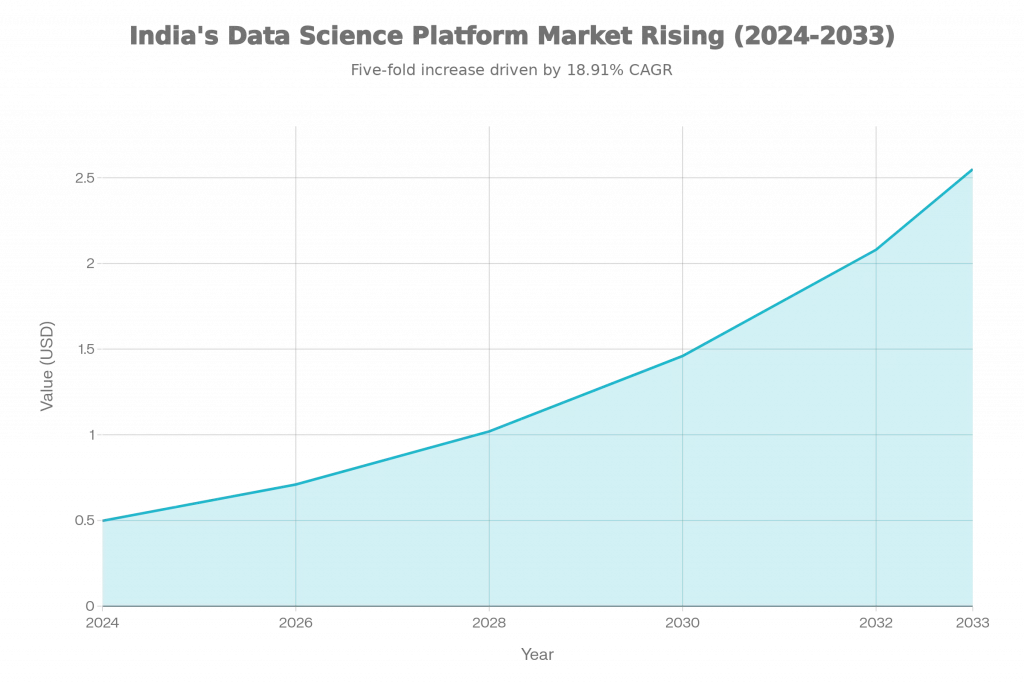
India’s data science industry is, for the most part, reflective of the overall data science industry. The overall data science industry is currently growing rapidly and India’s data science platform market, which is currently worth approximately USD 498.2 million, is projected to continue to grow and be worth USD 2,551.2 million by 2033, making its CAGR approximately 18.91%. This rapid expansion of the industry only continues to reinforce the need for professionals with post graduate diploma in data science, opening up several lucrative opportunities.
This guide covers everything one needs to know about pursuing a postgraduate diploma in data science, including eligibility, curriculum, post-graduation possibilities, and salaries.
What is a Post Graduate Diploma in Data Science?
A post graduate diploma in data science is a program designed to provide professionals with advanced skills in practical data science areas such as data mining, machine learning, deployment of artificial intelligence, and other applicable big data technology. Unlike traditional master’s degrees, a post graduate diploma in data science focuses on relevant skills found from industry research, while including a comprehensive curriculum that incorporates hands on experience.
A post graduate diploma in data science will take roughly 12 – 18 months to complete. This timeline is considerate of other post graduate diploma and the busy lives of working professionals. The summary of the program and course outlines demonstrates an effort to ensure that the curriculum is relevant as far as the industry’s information shortages are concerned from an academic and research standpoint.
Why Choose a Post Graduate Diploma in Data Science?
An immediate advantage of focusing on industry relevant skills and information is that the skills learned from the program will have a direct impact on their relevant field. The practical skills gained to assist in solving real world business problems are applicable in a vast number of job positions and roles, easily estimated over a dozen. The vast number of post graduate diploma in data science are accompanied with job placement services and industry-related opportunities. This bi-level advantage allows immediate impact to a great number of job roles, and their related industries.
Eligibility Criteria for Post Graduate Diploma in Data Science
Candidates who intend to enroll for a post graduate diploma in data science must satisfy certain prerequisites that mildly vary by institution. One must understand these qualifying criteria to ascertain if one meets the eligibility for the desired institution one seeks to enroll for.
Academic Qualifications
A bachelor’s degree from a recognized university is the primary eligibility requirement for a post graduate diploma in data science. Most institutions consider candidates with the following qualifications:
- A bachelor’s degree in any stream (Engineering, Science, Commerce, Mathematics, Computer Science, or BCA)
- At least 50% aggregate marks or a CGPA that is equivalent during the undergraduate program
- There are institutions that consider applicants who possess a three-year undergraduate degree
- Undergraduate students in their final year who are yet to receive their results are eligible to apply provisionally.
A post graduate diploma in data science accepts applicants from a wide range of disciplines. Hence, you can apply for a post graduate diploma in data science with a degree from Computer Science or Engineering as well as from Commerce or Economics, provided you satisfy the minimum academic qualifications.
Experience Related Criteria
Even though it is not necessary for all programs, most institutions with post graduate diploma in data science would prefer or require:
- 1-2 years of relevant work experience for executive programs.
- No work experience needed for immediate post graduation enrollment.
- Recent graduates are permitted to enroll in post graduate diploma in data science programs full time.
Other Criteria
In some cases, institutions may require for post graduate diploma in data science some of the following:
- Primary understanding of any programming language ideally C, Java or Python.
- Mathematics and statistics up to 10+2 level.
- Scores of qualifying entrance exams (if any)
- Recommendation letters from professors for non-technical candidates
Top Institutions Offering Post Graduate Diploma in Data Science
India hosts several world-class institutions offering quality post graduate diploma in data science programs. Here’s an overview of leading providers:
| Institution | Program Name | Duration | Key Features | Average Salary |
|---|---|---|---|---|
| IIT Jodhpur | PG Diploma in Data Engineering | 12 months | Industry-oriented, 35 credits, IIT alumni status | Not specified |
| IIT Bombay | Executive PG Diploma in AI & Data Science | 18 months | Online delivery, Generative AI focus, campus ceremony | 12-15 LPA |
| IIT Madras | Diploma in Data Science | 8 months | Flexible online format, affordable | 8-12 LPA |
| IIIT Bangalore | Executive Diploma in DS & AI | 12 months | Real-world projects, 2800+ hiring companies | 8-12 LPA |
| SRM Institute | PG Diploma in Data Science | 2 years | Full-time, NIRF ranked 19 | 11 LPA |
| Symbiosis SCIT | Post Graduate Diploma Data Science | 2 years | Full-time residential, industry collaborations | 4-8 LPA |
| BITS Pilani WILP | PG Certificate in AI & ML | 6-12 months | Industry-aligned, working professionals | 6-10 LPA |
Curriculum and Core Subjects in Post Graduate Diploma in Data Science
A post graduate diploma in data science is offered by many universities and schools via an online or in-person format. The curriculum is designed to cover analysis of data in the practical and theoretical perspectives that diplomas incorporate modules which span over 4 to 6 semesters. Below is an overview of the core subject modules:
Semester 1: Foundations
- Programming for Data Science: Students learn the fundamentals of programming using Python and R.
- Applied Mathematics and Statistics: Students examine the areas of linear algebra, probability, and hypothesize testing.
- Database Design and Management: Students learn about the fundamentals of SQL and other database systems, data architecture and design, and data modeling.
- Introduction to Data Science: Students learn the data science pipeline and processes, and the fundamentals of exploratory data analysis, and data pre-processing.
Semester 2: Core Data Science Skills
- Machine Learning Algorithms: Students examine theory and practice in the areas of supervised and unsupervised learning, and model evaluation.
- Data Visualization and Dashboards: Students learn to use tools such as Tableau, Power BI, and programming in Matplotlib and Seaborn.
- Big Data Technologies: Students learn about and practice using systems such as Hadoop and Apache Spark and learn about distributed computing.
- Advanced Statistics: Students learn and practice time series analysis, regression and statistical inference.
Semesters 3-4: Specialization
- Deep Learning: Students master the use of neural networks and learn programming in TensorFlow and PyTorch, and convolutional neural networks.
- Natural Language Processing (NLP): Students learn and practice text mining, sentiment and opinion analysis, and other NLP models.
- Cloud Computing: Students learn about and practice using AWS, Azure and Google Cloud for data science.
- Data Mining and Warehousing: Students learn about and practice ETL (Extract, Transform, Load) processes and data warehousing models and structures, and Online Analytical Processing (OLAP).
Capstone Project
Data Science students are required to complete a Capstone Project where they design and implement a project in order to demonstrate any and all of the skills they have acquired during the course to solve a real-world business problem. This prepares students for industry roles.
Important skills acquired in Post Graduate Diploma in Data Science
Graduates from Post Graduate Diploma in Data Science are equipped with a high level of skills which the job market highly demands:
Technical Skills:
- Ability to program in Python, R and SQL
- Development and deployment of ML models
- Data cleansing, pre-processing and feature engineering
- Hypothesis testing and statistical analysis
- Big data processing using Spark and Hadoop
- Cloud computing and containerization (Docker, Kubernetes)
- NLP applications
- Implementation of Deep Learning and Neural Networks
Business Skills:
- Data driven decision making
- Business intelligence and analytics
- Data problem solving
- Insight communication to stakeholders
- Agile methodologies and project management
Soft Skills:
- Data storytelling and Visualization
- Cross functional collaboration
- Critical thinking and analytical thinking
- Simplifying complex ideas and communicating them to non-technical audiences
Career opportunities with a Post Graduate Diploma in Data Science
There are many industries with well paying jobs that are available upon completion of Post Graduate Diploma in Data Science. Graduates in this program often take on these roles:
- Data Scientist: Making ML models and producing actionable insights from ML complex data sets
- Data Engineer: Creating the data architecture, ETL pipelines, and data warehouse systems
- Machine Learning Engineer: Managing and deploying ML models in production
- Business Analyst: Using business analytics to craft and direct the business from data.
- Analytics Manager: Managing analytics teams and managing data driven projects
Industry-Specific Opportunities
Data science professionals with a post graduate diploma have the chance to excel in:
- Finance and Banking: Analysis of credit risks, fraud detection, trading with algorithms
- Healthcare: Diagnosing patients, optimizing treatments, discovering new drugs
- E-commerce: Analyzing customer behavior, personalizing services, managing inventory
- Manufacturing: Predictive maintenance, supply chain efficiencies, controlling quality
- Telecommunications: Optimizing networks, predicting customer churn, improving service quality
- Government and Public Sector: Analyzing policies, planning cities, smart city projects
- Startups: Comprehensive data services, founding positions in analytics startups
Salary and Compensation Outlook for Graduates of Post Graduate Diploma Programs
The most compelling reason to pursue a post graduate diploma in data science is the salary, which is tremendous. Salary is dependent on a myriad of factors of which the most notable include experience, location, company, and area of specialization.
Experience Based Salary Variations
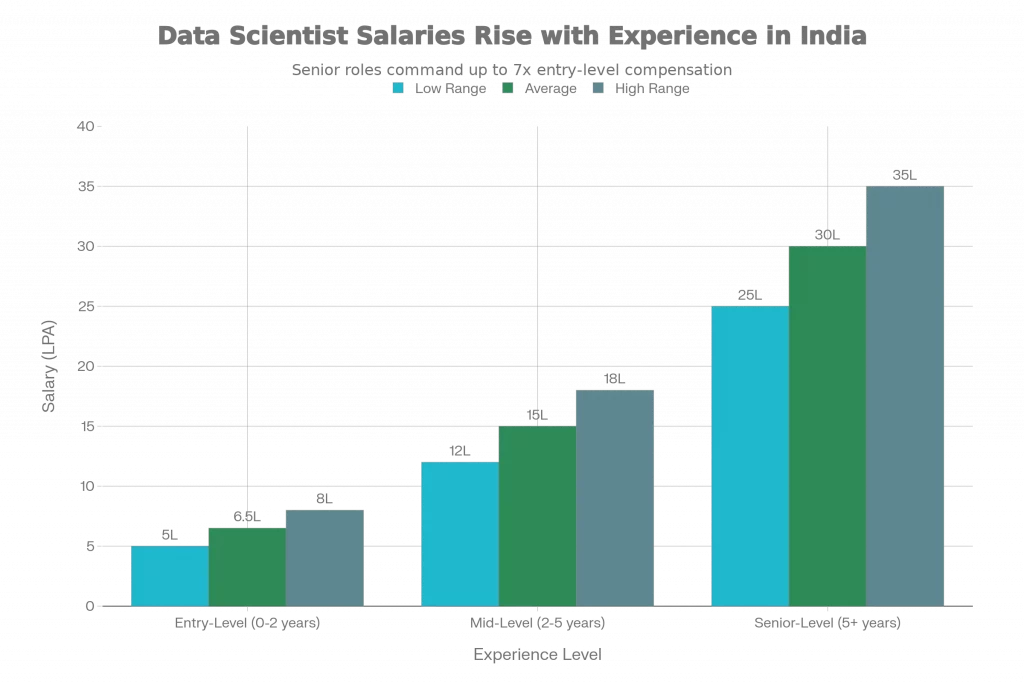
Entry-Level Salary (0-2 Years Experience)
Those just starting a post graduate diploma in data science should anticipate:
- Average Salary: 5-8 lakhs
- Range: With hiring company and location, this can vary 4-10 LPA
- Prestige employers FAANG: 8-12 LPA starting for fresh graduates
Mid-Level Salary (2-5 Years Experience)
Persons with intermediate career development in data science positions:
- Average Salary: 12-18 LPA
- Range: 10-22 LPA based of specialization and company tier
- Advanced Skills: 15-25 LPA for specialization in deep learning and ML engineering
Senior-Level Salary (5+ Years Experience)
Senior data scientists and team leaders:
- Average Salary: 25-35 LPA
- Range: 20-40 LPA for niche areas
- Top Earners: 40- 50+ LPA for high managerial positions, especially in start-ups
Location Based Salary Variations
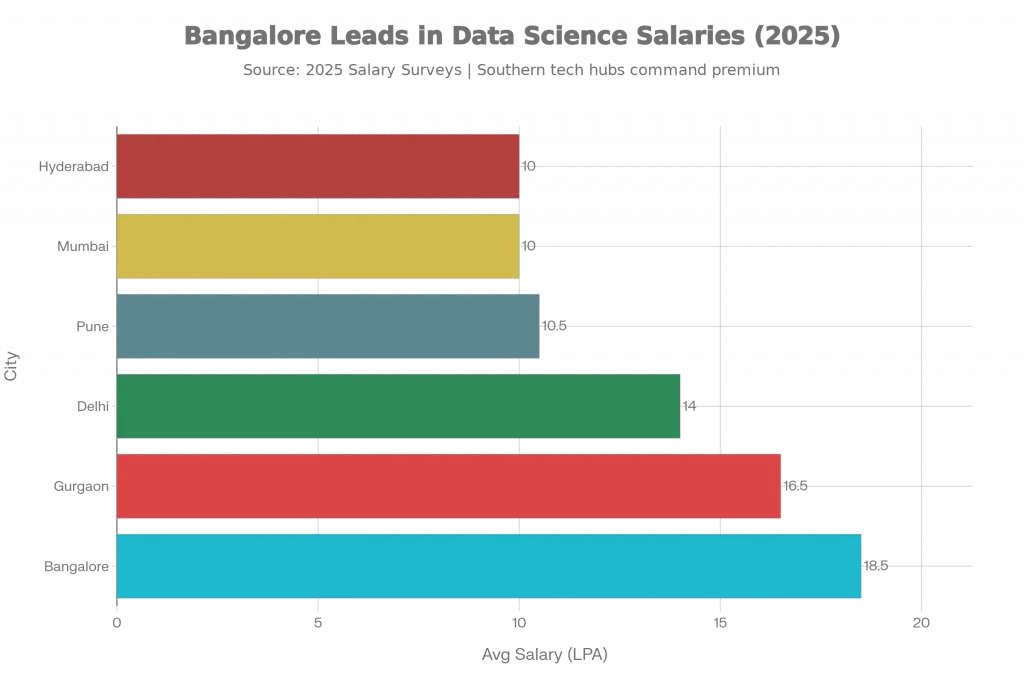
- Bangalore: 18.5 LPA on average (highest in India)
- Gurgaon: 16.5 LPA on average
- Delhi: 14 LPA on average
- Hyderabad: 10 LPA on average
Industry-Based Salary Variations
- Finance & Banking: 10-30 LPA (highest paying)
- IT & Software: 8-25 LPA
- E-commerce: 9-28 LPA
- Healthcare: 7-20 LPA
The potential financial return is why a data science diploma is a justified cost.
Application Process for Post Graduate Diploma in Data Science
Applying for a post graduate diploma in data science involves the following steps:
Step 1: Submitting an Application
- Fill an application form on the school’s website
- Submit your academic transcripts, a CV, and a personal statement
- Pay the application fee (between ₹500-5,000)
Step 2: Entrance Exam (if applicable)
Some schools require an entrance exam for their post graduate diploma in data science:
- School-specific entrance exam
- GATE (Graduate Aptitude Test in Engineering)
- They may accept your scores from the CAT or MAT
- Areas tested: Mathematics, Programming, Basic Statistics
Step 3: Interviews and Shortlisting
- They will do a merit-based shortlisting using the entrance exam and application data
- You will have a personal interview (in-person or online)
- They will assess your motivation, problem-solving, and analytical skills
Step 4: Selection
- They will post the final merit list
- You will receive an offer for admission
- You will need to pay the fees and get your documents verified
- Then the program will start
Choosing Between Online and Full-Time Post Graduate Diploma in Data Science
When choosing a post graduate diploma in data science, students must choose a mode of study:
Full-Time Study
- Duration: 12-24 months
- Format: Classroom learning
- Ideal for: New graduates, learners who want to study full-time
- Benefits: Networking, immediate job placement, active learning
- Disadvantages: No income during the study
Online/Distance Learning
- Duration: 18-24 months
- Format: You choose your study hours
- You have online classes and you yourself will schedule classes to be at weekends or in the evenings
- Ideal for: Working adults who want to upgrade their skills
- Advantages: Flexibility, earning while studying, access from anywhere
- Disadvantages: Requires self-discipline, less networking
Hybrid/Executive Programs
- Duration: 12-18 months
- Format: Online and in-person sessions
- Ideal for: Structured but flexible learning for professionals
- Advantages: Balance of flexibility and mentorship, industry focus
Fee Structure for Post Graduate Diploma in Data Science
Data science post graduate diploma costs can differ from institute to institute and from country to country.
Government/Semi-Government Institutions
- IIT Programs: Total ₹3-5 lakhs
- Central Universities: Total ₹1-3 Lakhs
- State Universities: Total ₹50,000-1.5 Lakhs
Private Institutions
- Top-tier Private Universities: Total ₹8-15 Lakhs
- Mid-tier Private Institutions: ₹4-8 Lakhs
- Online Platforms: ₹2-6 Lakhs
Some Cost examples:
- GTU PG diploma: ₹13,125 per semester (annual program 26,250)
- IIT Bombay Executive Program: 18 months ₹8-10 lakhs approximately
- Online Program: Flexible payment ₹3-6 Lakhs
Multiple institutes provide scholarships, early bird discounts and EMI plans (0% interest included), making PG diploma in data science affordable for deserving candidates.
Strong Demand and Future Potential of Data Science Jobs
The job market for data science professionals continues to be very strong and is expected to continue accelerating. Current market analysis has shown:
Current Demand:
- The data science market of India continues to show growth of approx. 8.4% for the third quarter of 2024 along with an 8.2% growth in GDP.
- There is a huge gap in the demand and supply of data scientists across different industries.
- The top 3 technology companies in India, TCS, Infosys, and Wipro are currently hiring PG Diploma Graduates.
- Startups are paying top salaries to lure data science professionals.
Future Growth Forecast:
- According to the US Bureau of Labor Statistics, employment growth for data scientists is expected to reach 34% by 2034.
- The data science market in India is expected to continue to grow at a CAGR of 18.91% until the year 2033.
- There are new opportunities in AI, Machine Learning and Deep Learning, Generative AI, etc.
- New specializations in Reinforcement Learning, Autonomous Systems, Advanced Healthcare Diagnostics, etc.
Industry Expansion:
The demand for data scientists is now coming from many non-traditional industries, such as:
- Government programs like “Digital India” and “AI-for-All”;
- Data science in public sector institutions (e.g. ISRO, DRDO, NITI Aayog);
- Predictive analytics in manufacturing and logistics;
- Considerable investment by the health care sector in AI-driven diagnostics.
Guidelines for Selection of a Post Graduate Diploma in Data Science Program
Selecting a post graduate diploma in data science program involves numerous criteria.
Accreditation and Recognition
- Check for AICTE or UGC recognition
- Assess ranking in NIRF if possible
- Assess the history of alumni and the available placements
- Assess the history of faculty and their qualifications
Curriculum Suitability
- Check if curriculum covers contemporary topics such as AI, Generative AI and Cloud.
- Assess curriculum for the presence of practical projects
- Assess the presence of industry collaboration and documented case studies
- Assess the availability of lab resources and tools
Assessment of Placement
- Assess the history of available placements and their remuneration
- Assess the presence of tools for resume preparation and interview coaching
- Assess the presence or absence of industry collaboration for placements
- Assess the history of alumni for available placements
Flexibility in Learning
- Assess your existing workload
- Assess the availability of online, full time or hybrid learning
- Assess class schedules and durations
- Assess the availability of recorded sessions
Costs vs Benefits
- Assess the costs of the program against the projected remuneration
- Assess the availability of scholarships and EMIs
- Assess costs incurred for travel in the case of full time learning
- Assess the inclusions in the program fee
Tips for Post Graduate Diploma in Data Science Students
Attending and completing a post graduate diploma in data science takes a lot of commitment and strategic planning for it to be done successfully.
Attending and completing a post graduate diploma in data science takes a lot of commitment and strategic planning for it to be done successfully.
While in Your Program:
- Establish a profound portfolio containing a variety of real-world projects.
- Be fully invested and take active part in all case studies and group assignments assigned in your cohort.
- Specialize and develop unique expertise in a specific field.
- Create and develop a solid network with your cohort, educators, and other stakeholders in the industry.
- Complete and sufficient all the requirements for any internships and/or consultancy assignments that are part of the program.
Technical Proficiency:
- Achieve a high level of understanding and control of the coding language Python and the database language SQL.
- Prepare and practice to be able to code and apply algorithms from the most basic or simplest to the most complex levels.
- Prepare a variety of datasets to work on that cover all the various industries.
- Keep and maintain your knowledge of the newest/latest tools and the newest/latest frameworks.
- Make a positive and constructive contribution to all collaborative data science.
Establishment of Soft Skills:
- Storytelling and data Visualization.
- Technical presentations and communication in a simplistic way.
- Understanding of business and the industry.
- Understanding of and the ability to lead the group.
After Your Post Graduate Diploma in Data Science
You should adjust your life to be one of continuous learning
- Participate in data science applicants communities
- Post data science jobs where you work with data
- You should publish your case studies
- You should publish your data science research
Conclusion:
Because of the rapid growth of India’s data science industry and the ever-increasing demand for the computation of data across multiple fields, those who hold a post graduate diploma in data science will have plenty of opportunities and attractive pay packages. This qualification provides the knowledge and skills necessary to achieve career progression, a change of industry, or even new entrepreneurial activities.
As more and more organizations begin to emphasize data-driven processes, a candidate will be more attractive for a data science position. A post graduate diploma in data science will help a candidate gain skills that will be usable for many years to come, even as technologies change in order to adopt a new focus based on statistical analysis, machine learning, and data interpretation.
Advance your career in data science by looking into programs provided by credentialed institutions, determining your professional objectives, and starting your journey. Becoming a data science professional is in your future.



It’s exciting to see how fast the data science industry is growing, especially in India. With so many opportunities in the field, a post graduate diploma can be a solid step for anyone looking to advance or shift their career. The potential for career growth really makes it a worthwhile investment.
GreatData Science Comment Creation breakdown of why a PG Diploma in Data Science is becoming such a strategic move right now. The growth numbers you highlighted really show how quickly the demand curve is shifting, especially in India. It might also be helpful for learners to assess whether they prefer a more technical or business-oriented path early on, since that can shape how they approach the curriculum and future roles.
It’s interesting how data science is becoming an accessible field for those coming from various educational backgrounds. The Post Graduate Diploma seems like a perfect bridge for both fresh grads and experienced professionals.
The fact that this diploma is well-suited for both new graduates and those with work experience is really appealing. It’s great to know that the curriculum is designed to cater to a variety of learners and skill levels.
The rapid growth of India’s data science market is fascinating! With such high projections, it’s clear that now is the perfect time to upskill in this field. A post graduate diploma seems like a great choice for anyone looking to enter or advance in data science.
I appreciate how this guide breaks down the benefits of a post-graduate diploma in data science. It’s not just about the technical skills but also understanding the career opportunities available after completing the program. It seems like a great way to get ahead in an industry that’s constantly evolving.
The point about India’s data science market growing to over USD 2.5 billion by 2033 really stood out—it’s a strong reminder of how quickly analytics roles are expanding. For anyone considering a shift into data, understanding how a PG diploma bridges the gap between theory and industry needs is crucial. It might also help learners to look into how these programs balance technical depth with practical, real-world project experience.
The projected growth of India’s data science industry is impressive! It really highlights how much opportunity there is in this field. It’s great to see how the post graduate diploma program is helping both newcomers and seasoned professionals prepare for this booming industry.
The growth projections you highlighted really show how quickly the demand for data talent is shifting, especially in India. What stood out to me is how a PG Diploma can serve both fresh graduates and experienced professionals looking to pivot into analyticsBlog Comment Creation Guide—there aren’t many programs that truly cater to both groups. It would be interesting to see how these diplomas evolve as tools like AI automation reshape the data workflow.
The rise in demand for data science professionals is so evident right now, especially with the booming market in India. It’s exciting to see how a Post Graduate Diploma can open doors for both newcomers and professionals looking to pivot.
The growth numbers you mentioned really highlight how quickly the demand for data talent is expanding, especially in India. One thing I think many learners overlook is how valuable a PG Diploma can be for professionals transitioning from non-technical backgrounds—it offers a structured way to build both foundational skills and industry-ready expertise. It might also be worth exploring how emerging areas like generative AI and MLOps are being integrated into these programs, since they’re becoming core parts of modern data roles.
I think the versatility of a post graduate diploma in data science is what stands out the most. Whether you’re a fresh graduate or a professional switching fields, it offers a solid foundation to start or deepen your expertise in analytics. It will be interesting to watch how the job market adapts as more people pursue this diploma.
The potential for career advancement in data science really shines through in this post. I love that you highlighted the flexibility of the post graduate diploma—whether you’re just starting out or making a career change, it’s a great option for acquiring in-demand skills.
I love how you highlighted both the career potential and the fact that the diploma is beneficial for both fresh graduates and professionals looking to transition into data science. The industry is booming, and upskilling seems crucial to stay competitive.
It’s exciting to see that India’s data science market is projected to grow at such a strong rate! This creates huge potential for professionals looking to enter the field. I think the post-graduate diploma is a great choice for anyone wanting to upskill and get into the analytics-driven roles that are in high demand.
It’s fascinating how much the data science industry is growing. A post graduate diploma in data science really seems to be the perfect option for people who want to switch careers or specialize further. I’d love to see more details on what specific skills are covered in the curriculum.
It’s great to see more focus on post-graduate diplomas in data science as they open so many doors. I wonder if there are particular areas within data science, like AI or machine learning, that offer even more promising opportunities in the future?
I appreciate the clarity in this guide—data science is such a dynamic field, and this post highlights how essential it is to stay current with certifications like a post-graduate diploma to tap into these booming job opportunities.
Pingback: 6 Objectives of Artificial Intelligence: Complete Guide
Pingback: Best Online Courses In India: 2026 Guide - Zest Shiksha Blog